Huber Heights Sewer Pros
Tree Root Removal (Sewer Lines) in Huber Heights, OH
Tree root removal from sewer lines in Huber Heights clears intrusion and addresses the cracked joint behind it. Free estimates available.
- 15+ Years local experience
- 500+ Projects completed
- Licensed & Insured
Serving Huber Heights and nearby communities.
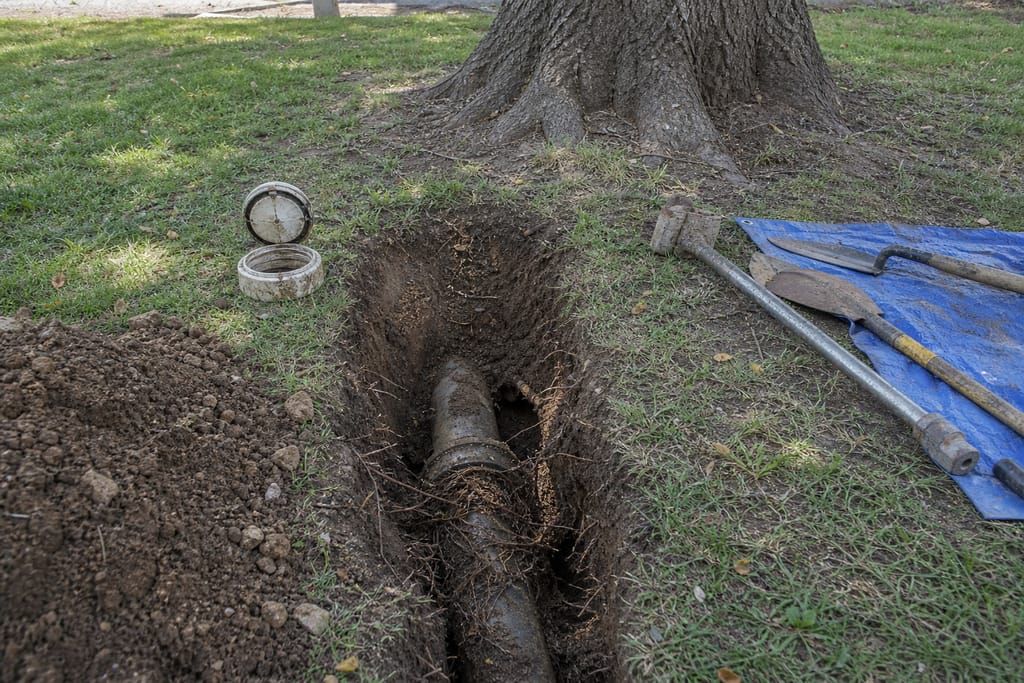
Why do roots keep coming back after a drain clears? Usually because the roots found a crack or separated joint to grow through in the first place, and clearing the roots alone doesn't fix that opening. Mature trees are common across established Huber Heights subdivisions, and they're the most frequent cause of root intrusion on the original clay laterals still running under a lot of these properties.
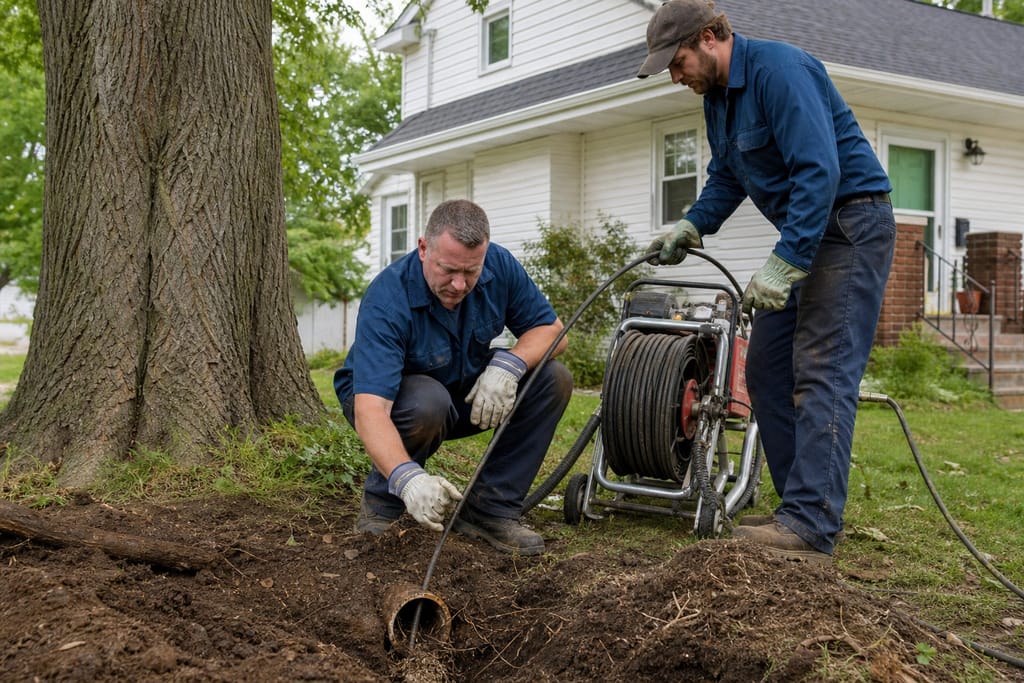
Huber Heights Sewer Pros clears the immediate blockage with mechanical cutting, then checks the pipe wall on camera to see if lining is needed to stop the roots from coming back at the same spot.
What's included
What's included with Tree Root Removal (Sewer Lines)
Typically included: camera confirmation of root location, mechanical cutting to clear the line, and a flush to remove debris. Optional: CIPP lining recommendation and quote if the camera shows a cracked joint behind the root intrusion. Customer prep: let us know if roots have been a recurring issue and roughly where mature trees sit relative to the sewer line.
Want a clearer scope?
Get a Free EstimateHow it works
How our Tree Root Removal (Sewer Lines) process works
 Step 1
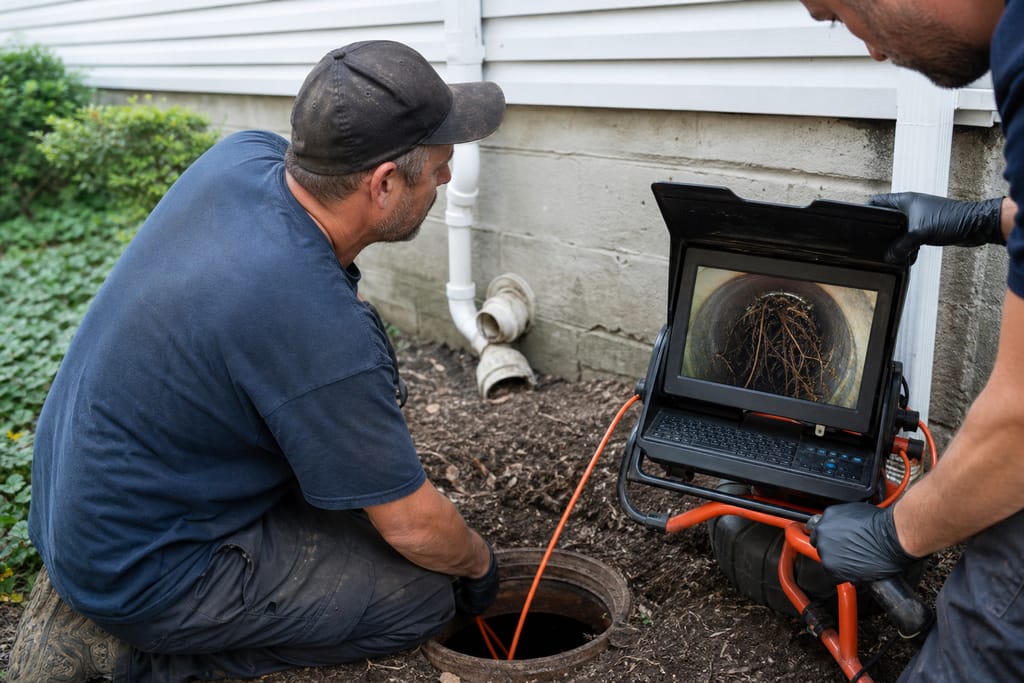
Root Intrusion Inspection
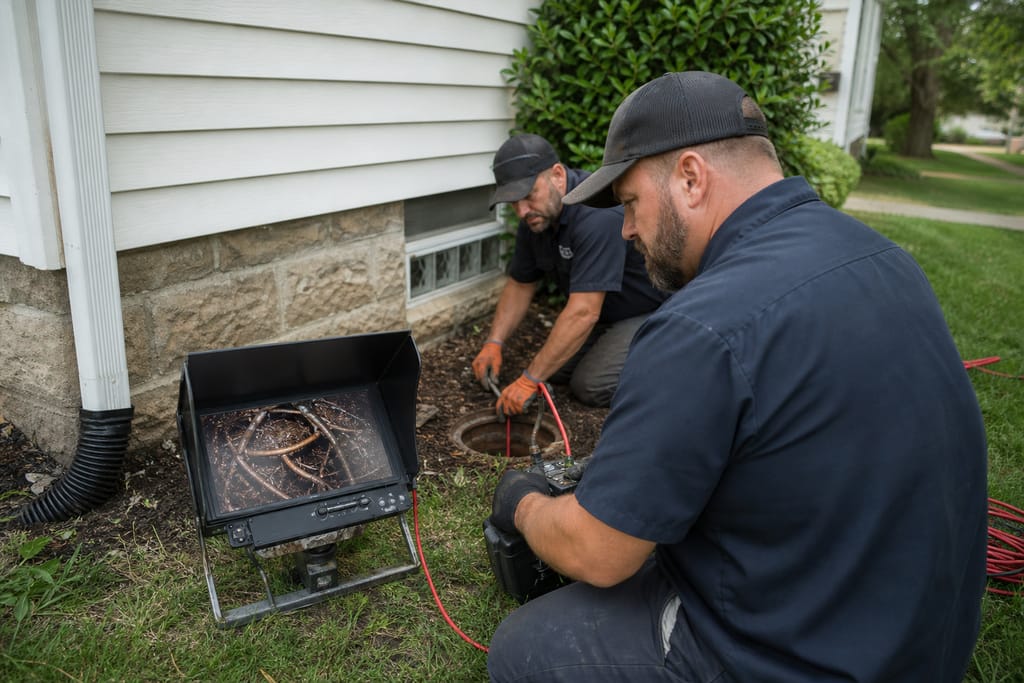
A camera inspection confirms the presence and extent of root growth in the pipe.
 Step 2
Cutting Plan
The technician determines the best cutting method based on root density and pipe condition.
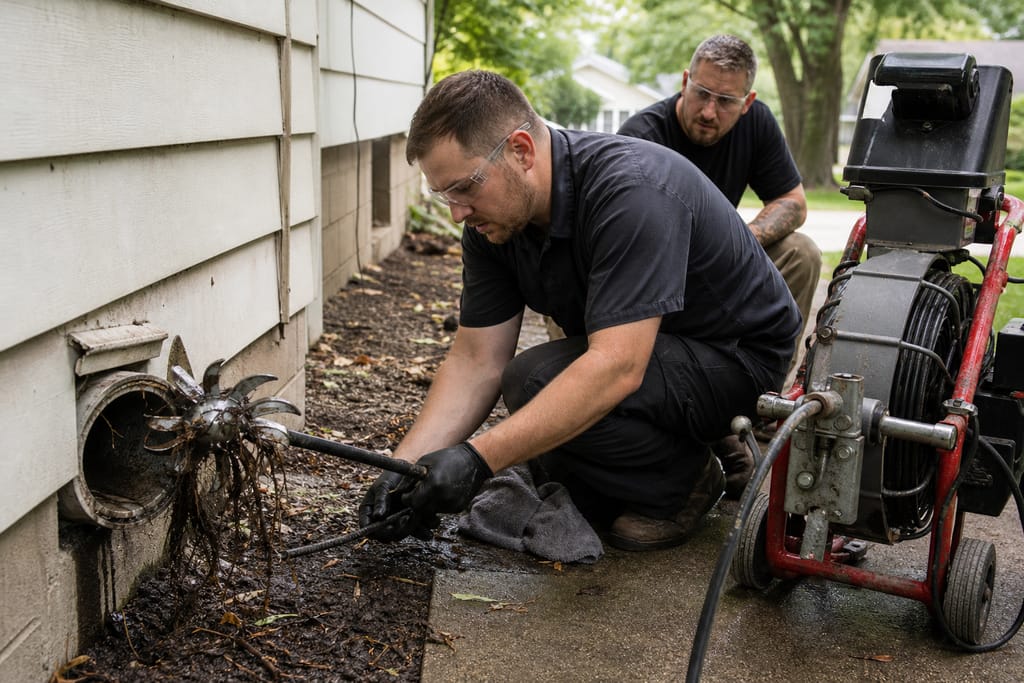 Step 3
Mechanical Root Cutting
Rotating blades or cutting heads clear roots obstructing the pipe interior.
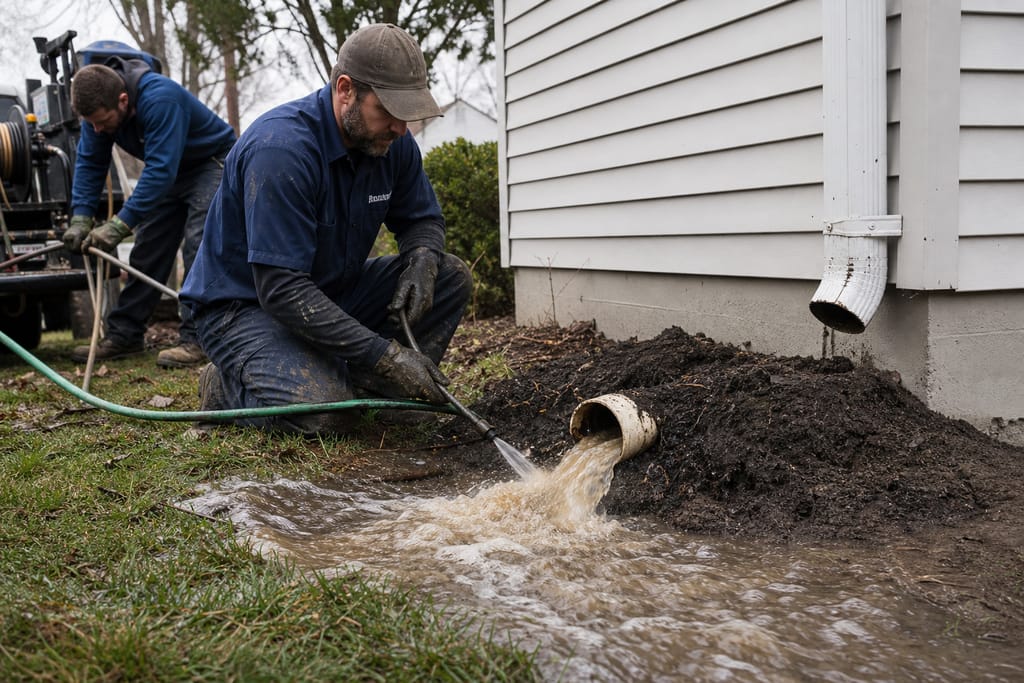 Step 4
Debris Flushing
Water jetting removes cut root material and debris from the line.
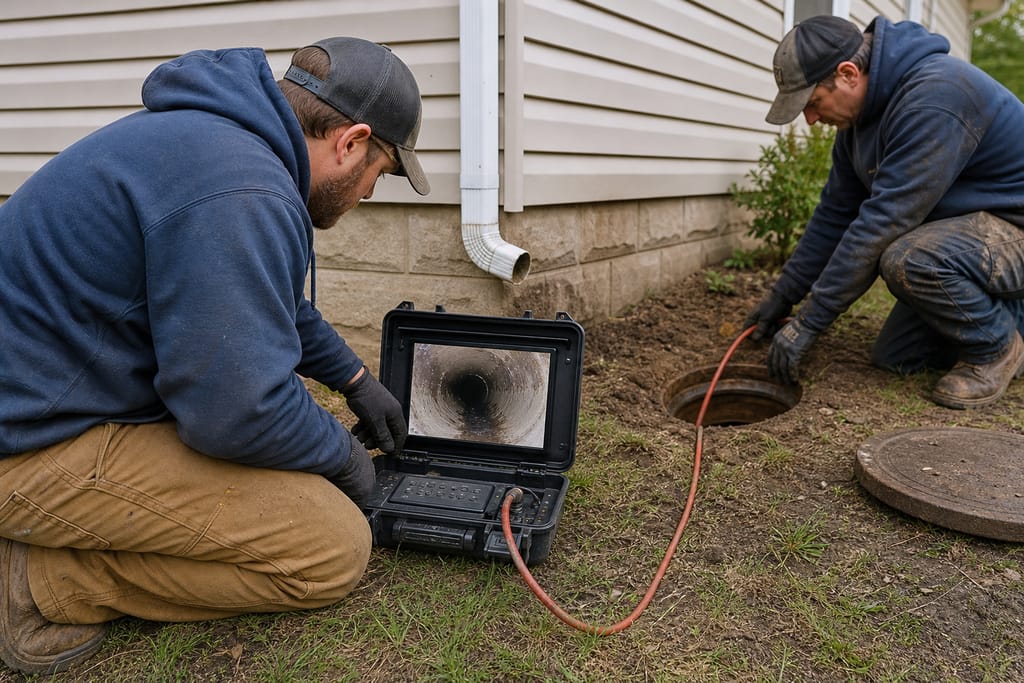 Step 5
Pipe Condition Check
The pipe is inspected again to assess any remaining damage caused by roots.
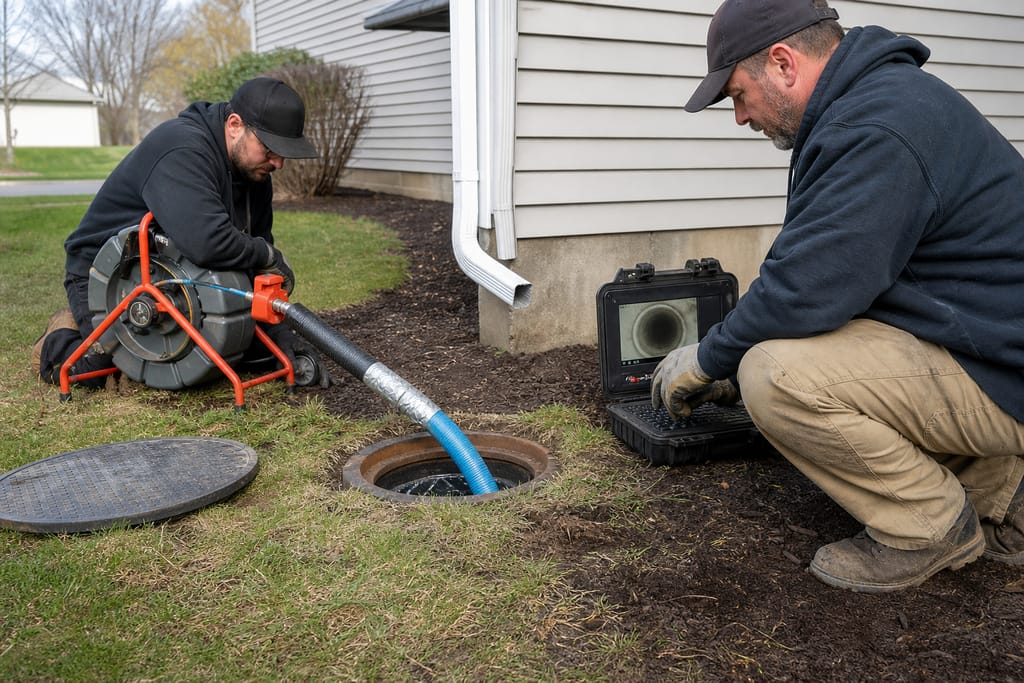 Step 6
Prevention Recommendation
Long-term solutions like lining are recommended to prevent future root intrusion.
Materials
Materials and methods for Tree Root Removal (Sewer Lines)
Clearing roots and preventing regrowth are two separate steps, and the right tools matter for both.
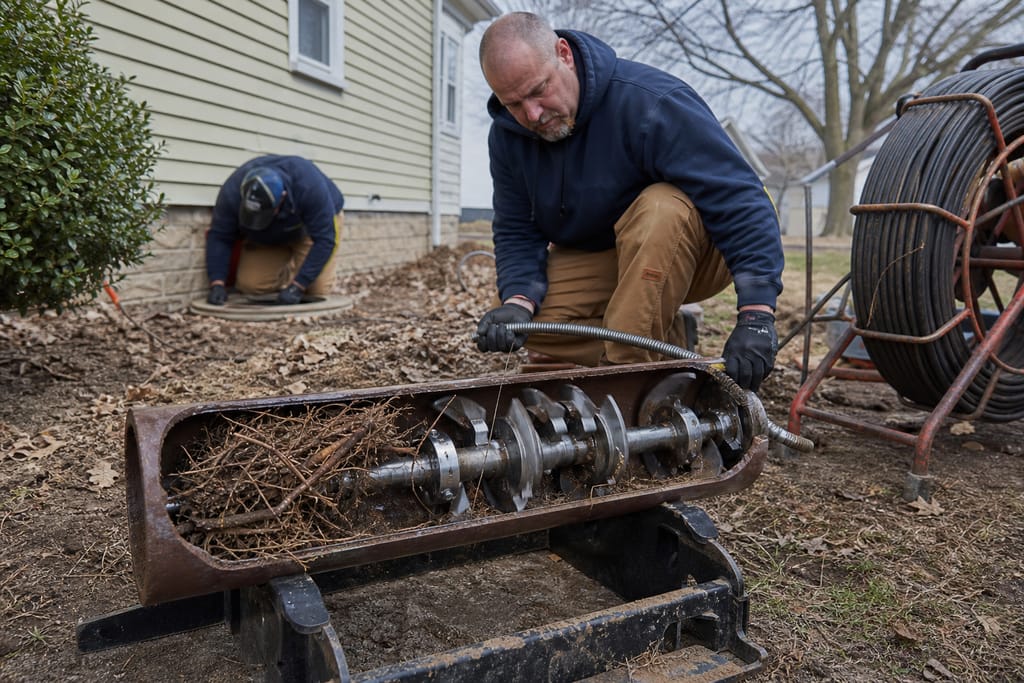
Root Cutting Blades
Slice through root masses without damaging the surrounding pipe wall.
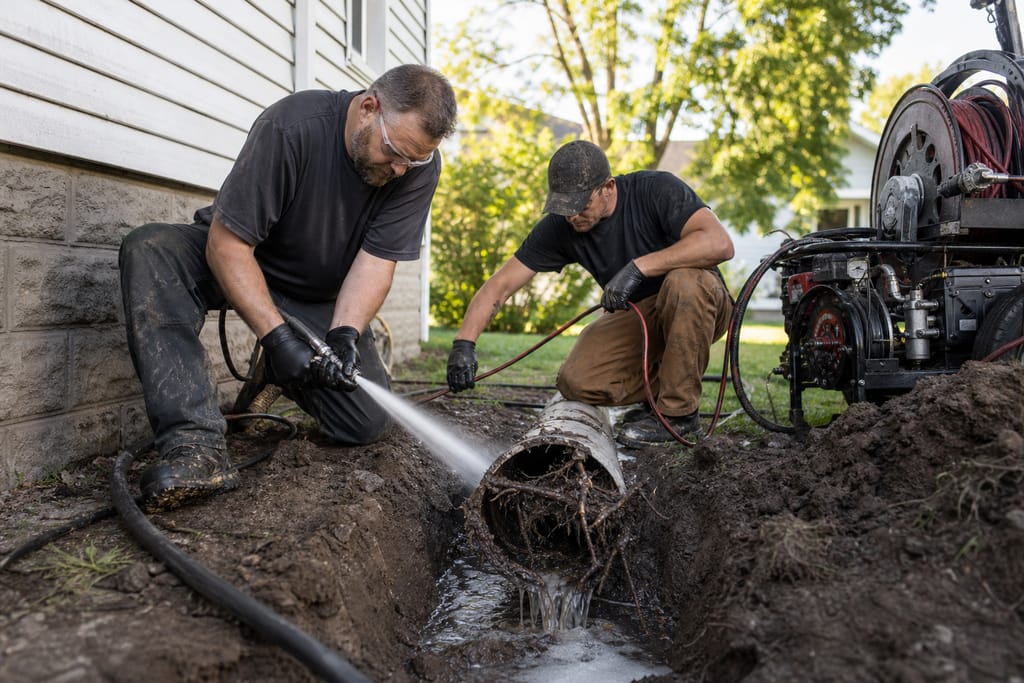
Hydro Jetting Equipment
Clears remaining root debris after cutting so flow is fully restored.
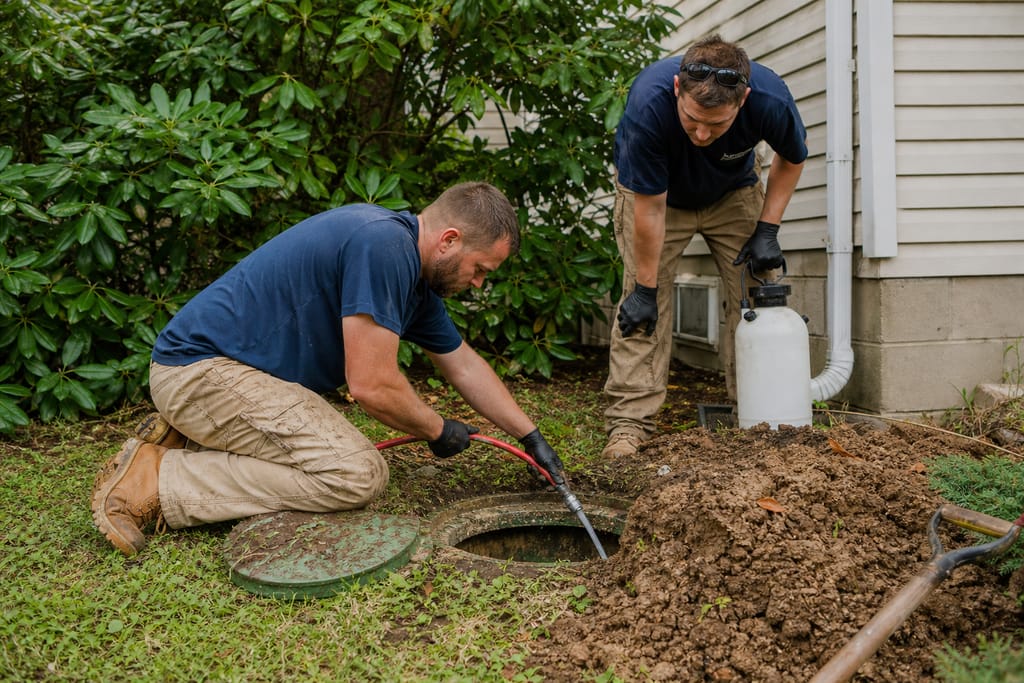
Root-Inhibiting Treatments
Chemical treatments help slow future root growth inside the pipe.
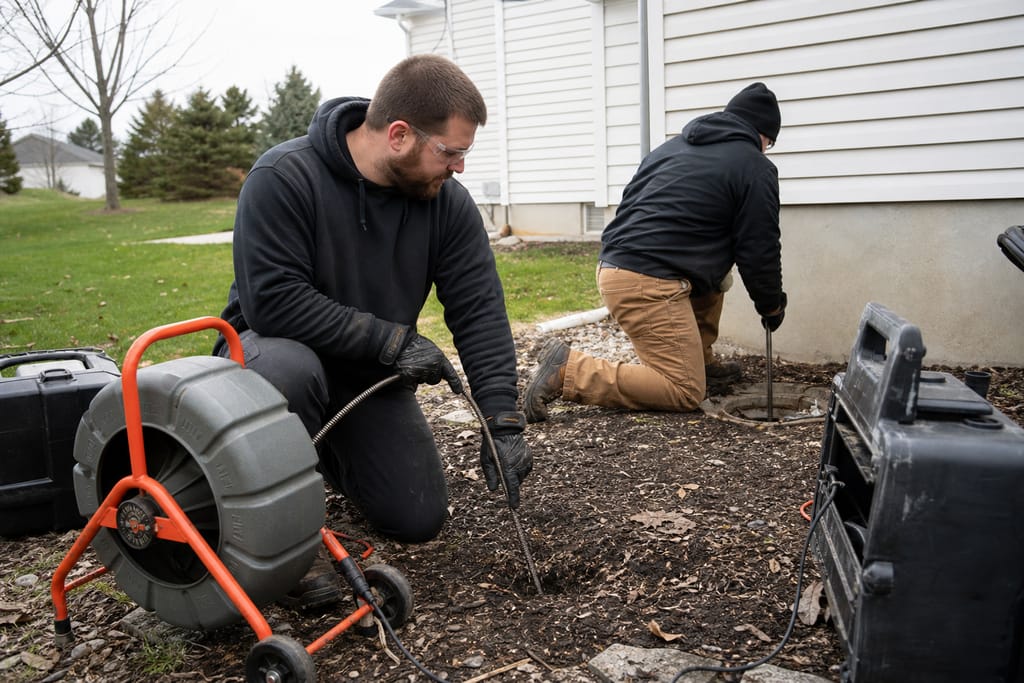
Flexible Cutting Cables
Guide the cutting head through bends to reach root-blocked sections further down the line.
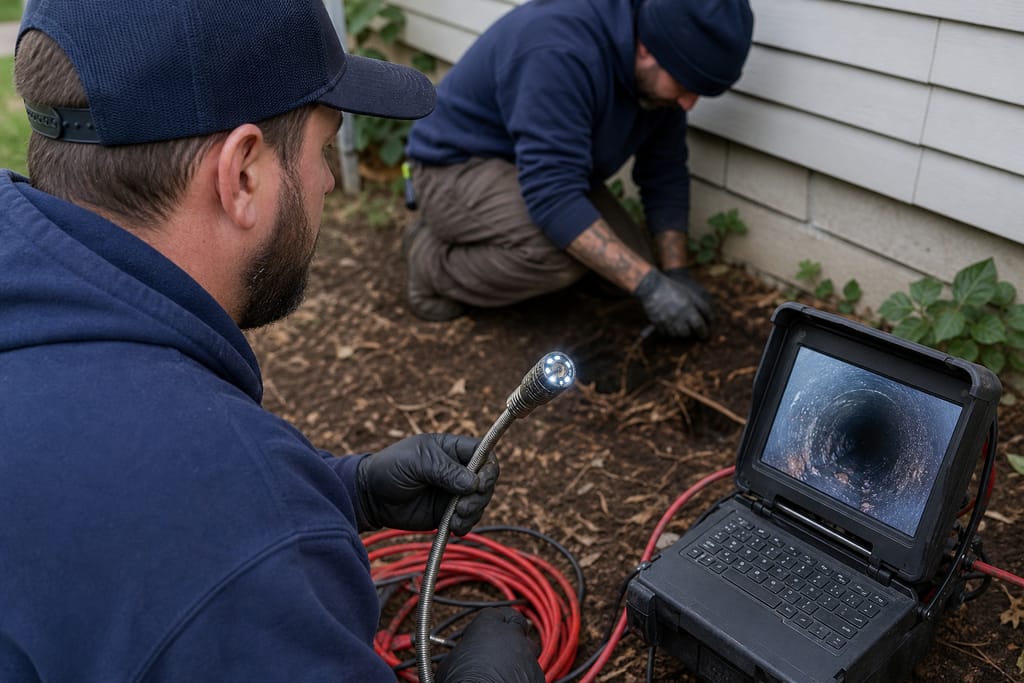
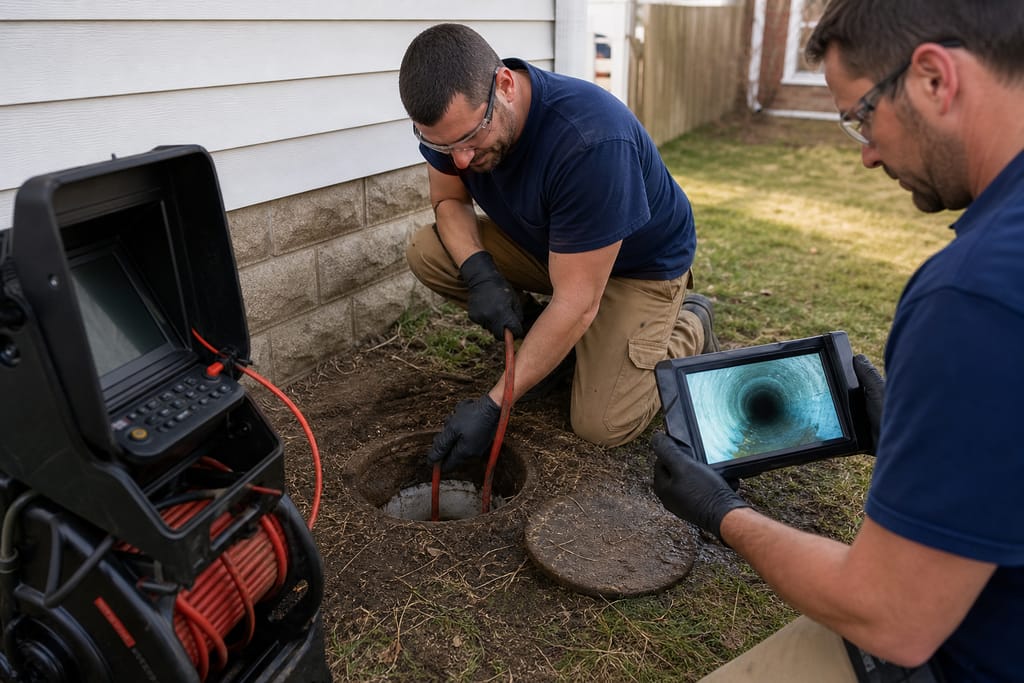
Inspection Camera Tools
Cameras confirm root removal and check for underlying pipe damage.
Protective Pipe Coatings
Coatings add a barrier that helps resist future root intrusion.
Questions on materials?
Get a Free EstimateTimeline
How long does a Tree Root Removal (Sewer Lines) take?
- 01
Stage 1
same-dayClearing roots is usually a job.
- 02
Stage 2
Lining to prevent regrowth, if needed, is a separate follow-up visit.
- 03
Camera inspection and root confirmation
30 minutes
- 04
Mechanical cutting and flush
1–2 hours - 05
Follow-up lining (if recommended)
1 dayseparate visit
Need a schedule that fits?
Get a Free EstimateDIY vs pro
DIY vs hiring a pro for Tree Root Removal (Sewer Lines)
| DIY | Hire a pro |
|---|---|
| Store-bought root killer chemicals, which only slow regrowth temporarily and don't fix a cracked joint underneath | Mechanically cutting root masses without damaging the pipe |
| Watching for early signs like slow drains near mature trees | Diagnosing whether a liner is needed to stop roots from returning at the same spot |
| — | Flushing debris completely so flow is fully restored, not just partially cleared |
Not sure DIY vs pro?
Get a Free EstimateWhen to call
When to call for Tree Root Removal (Sewer Lines)
Call for a free estimate and we'll run a camera to confirm what's causing the intrusion.
- Recurring backups near mature trees in the yard
- Camera inspection shows root intrusion at pipe joints
- Chemical root treatments have stopped working or only buy a few weeks
Seeing warning signs?
Get a Free EstimateBefore & after
Before and after Tree Root Removal (Sewer Lines)
Before 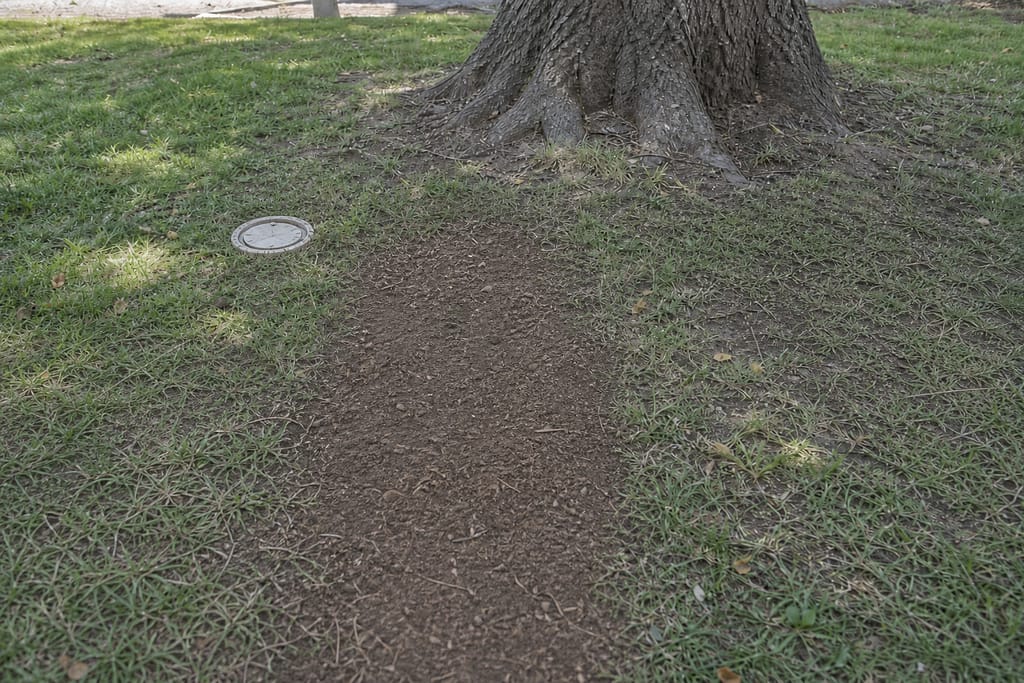
After
FAQs
Tree Root Removal (Sewer Lines) FAQs
Will trenchless lining work if tree roots already cracked the pipe?
Usually yes, as long as the pipe is still round and hasn't collapsed. The liner seals the cracked joint from the inside, which stops roots from finding that opening again.
How often do roots come back after removal?
Without a liner, roots can return within a year or two if the same crack is still open. Lining the affected section significantly reduces the chance of regrowth at that spot.
How much does tree root removal cost?
Mechanical cutting and flushing typically runs $300-$700. Adding a liner to prevent regrowth adds to that cost but prevents repeat service calls.
Can I just keep using root killer chemicals instead?
Chemical treatments slow regrowth but don't address the crack or joint separation the roots are using to get in. It's a temporary measure, not a fix.
Do I need to remove the tree causing the problem?
Not usually. Lining the affected pipe section is generally enough to stop root intrusion without removing a mature tree.
More services
Other Trenchless Sewer Repair services
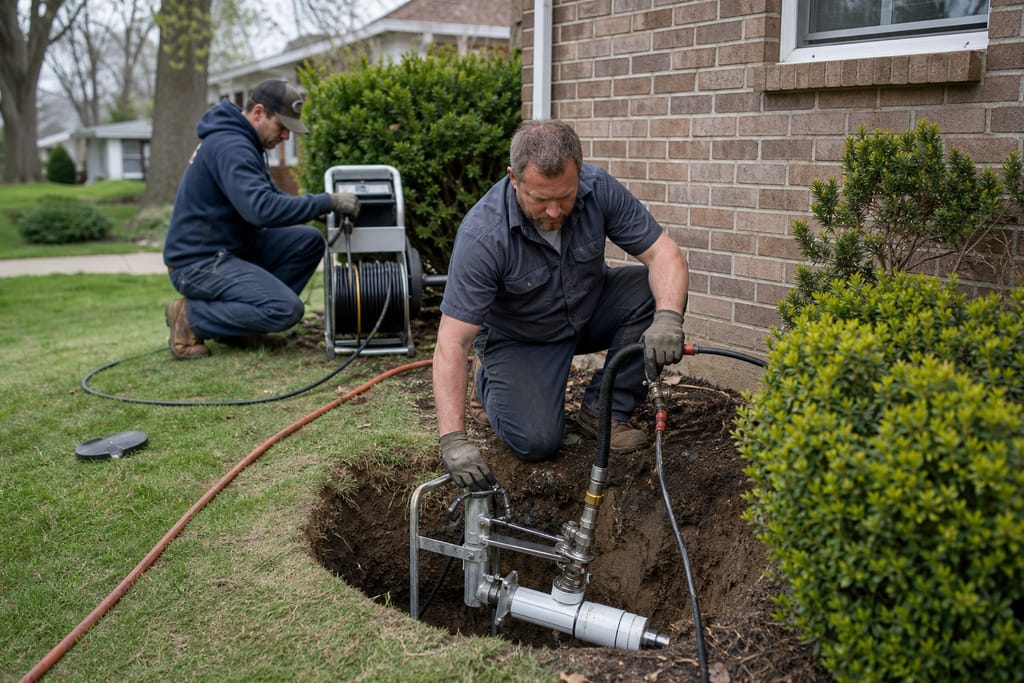
Trenchless Sewer Repair
Trenchless sewer repair with CIPP lining and pipe bursting, no-dig access, free estimates in Huber Heights.
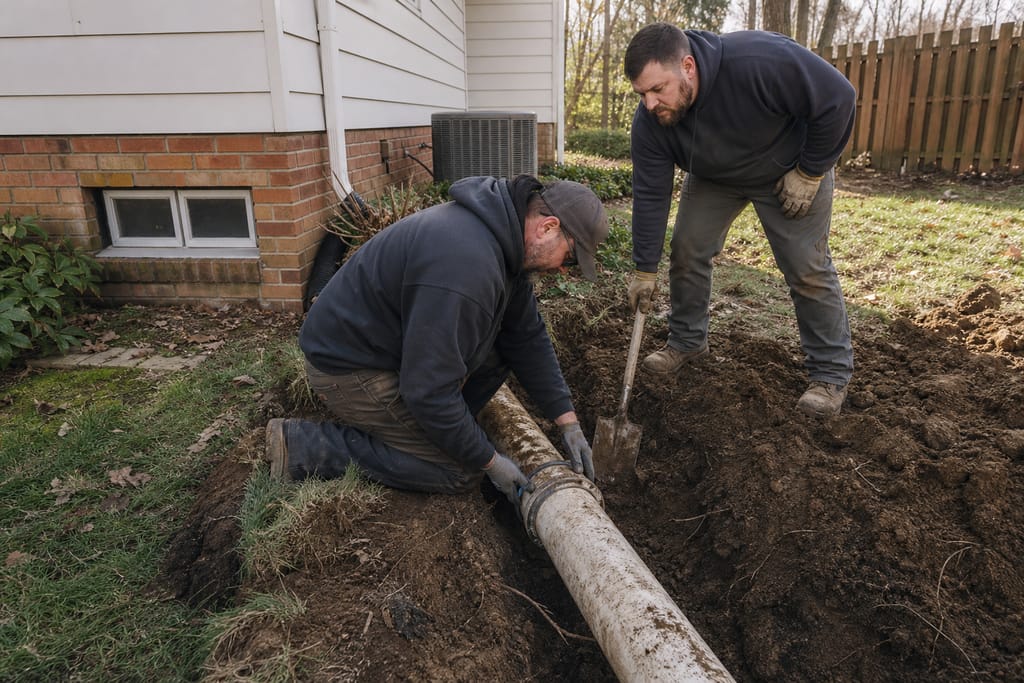
Sewer Line Repair
Sewer line repair in Huber Heights with camera diagnosis, trenchless spot repairs, and free written estimates. No-dig methods preferred.
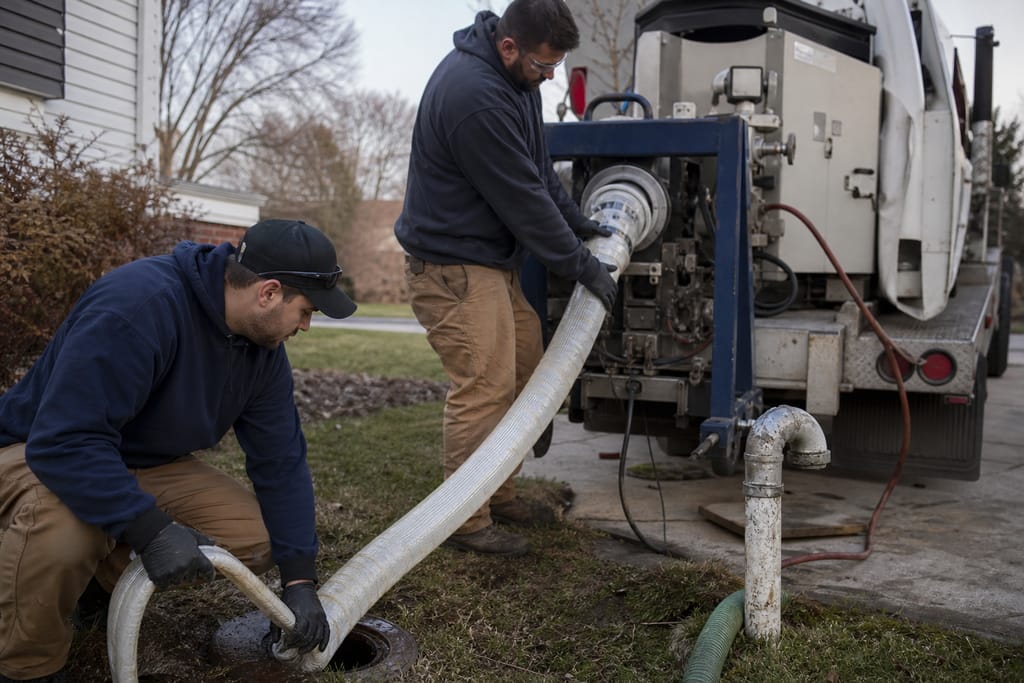
CIPP Pipe Lining
CIPP pipe lining restores cracked clay laterals without digging, small access points, free estimates in Huber Heights.
Ask about Tree Root Removal (Sewer Lines)
Tell us about the project and how to reach you.